Jack White You Know That I Know
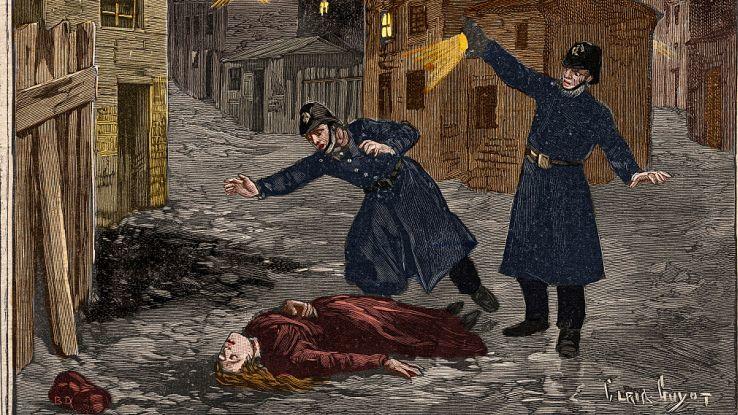
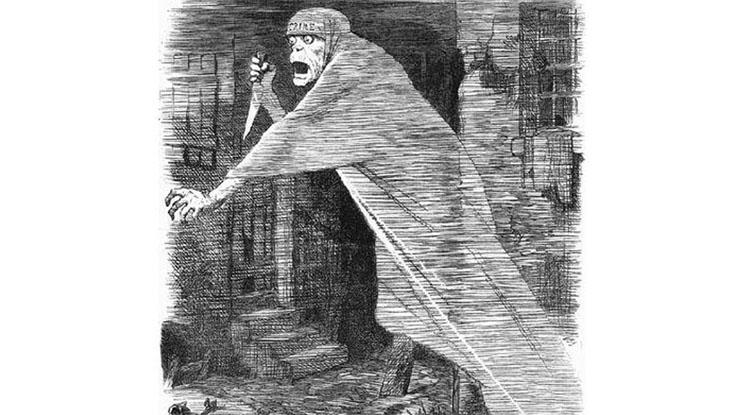
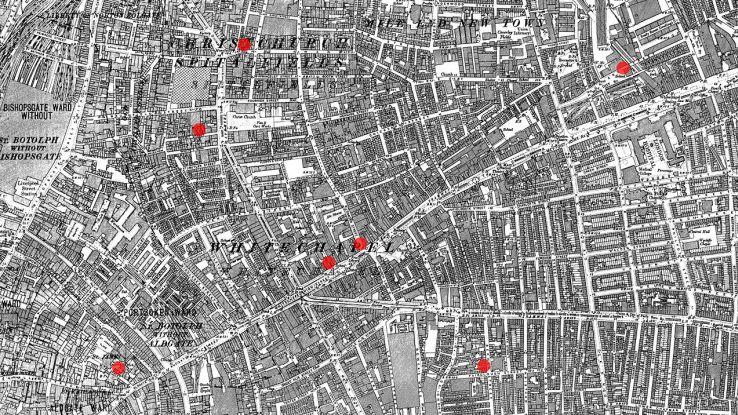
Who was Jack the Ripper? Police force and amateur sleuths akin have tried for over a century to uncover the identity of the person responsible for the gruesome murders of Mary Ann Nichols, Annie Chapman, Elizabeth Stride, Catherine Eddowes and Mary Jane Kelly.
The victims' bodies were slashed and their organs were advisedly removed. It was believed the person responsible had training as a physician or a butcher. While the instance remains unsolved, the post-obit individuals are some of the most likely suspects.
Famous Painter Walter Sickert
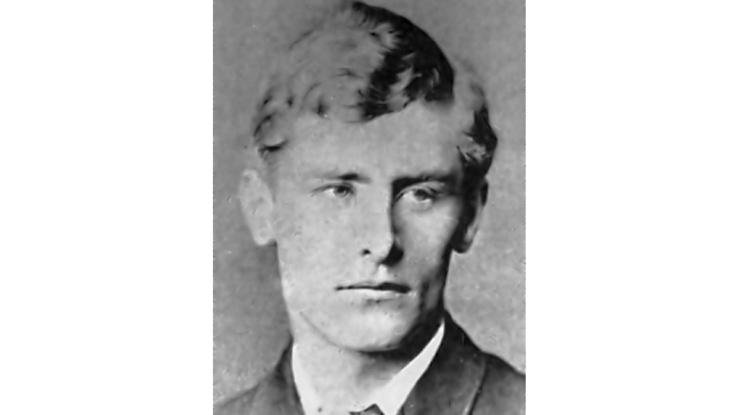
Could acclaimed British artist Walter Sickert exist Jack the Ripper? Sickert was a prominent painter whose piece of work depicted ordinary people and everyday life. While never linked to the murders during his lifetime, Sickert's name was kickoff tied to the Ripper murders back in the 1970s.
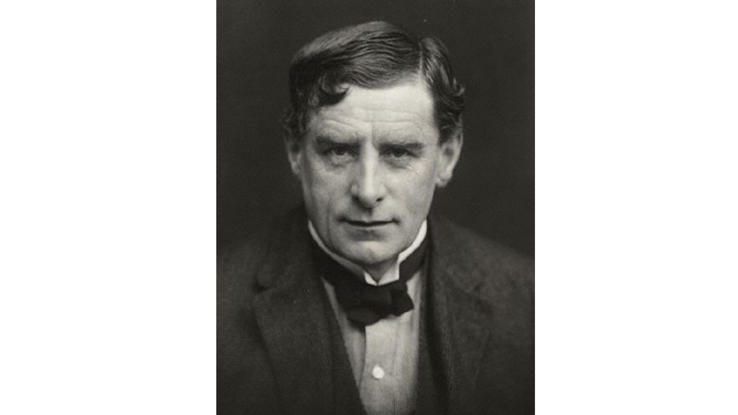
Subsequently trying his hand at interim, Sickert went on to join the family tradition of art. But Sickert broke from tradition by painting urban scenes rather than wealthy patrons' portraits. His work showed the transition from Impressionism to Modernism.
Every bit a immature human, Sickert studied under many influential artists, including Edgar Degas and James Abbott McNeill Whistler. Sickert's allure to urban civilization was then intense that he ofttimes lived and worked in some of London'south grittier neighborhoods. Sickert'south fine art frequently depicted dance hall girls and prostitutes.
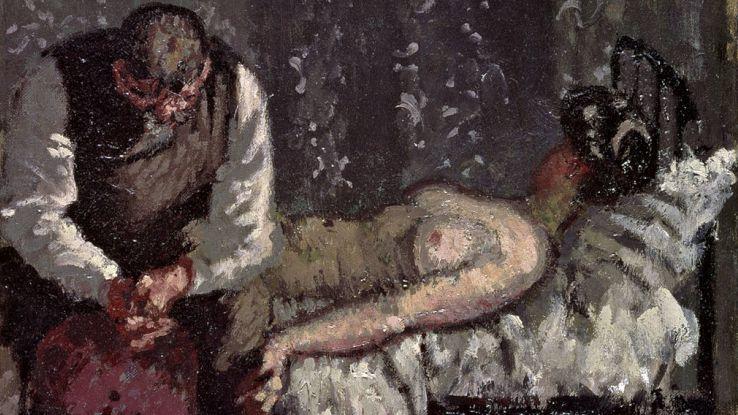
His fine art ofttimes had sexual themes that were considered vulgar and obscene. It'south believed that Sickert may accept been a client of some of the women who modeled for him. In 1907, he painted "The Camden Town Murder," a scene based on the grisly murder of a London prostitute whose throat was slit by her husband.
Sickert Painted "Jack the Ripper's Bedroom"
Sickert developed an involvement in Jack the Ripper after his landlady told him she suspected her previous tenant was the murderer. Sickert's interest before long turned into fascination. He eventually painted the dark space and named the piece "Jack the Ripper's Bedroom."
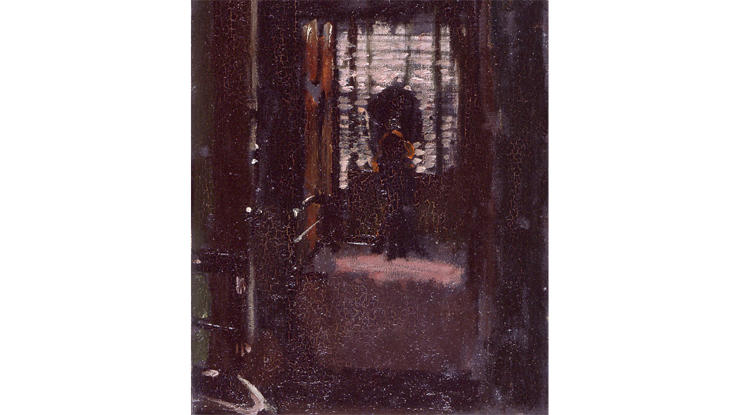
The work of art shows an ominous, shadowy room, as seen from the doorway, and leaves much to the imagination. The painting depicts a wooden chair and a dressing tabular array and chair nether a window with slightly opened blinds. The bodily room was located at 6 Morn Crescent. The painting is on display at the Manchester Art Gallery.
Author Patricia Cornwell Believes Sickert Is the Leading Suspect
Some researchers pegged Sickert either every bit Jack the Ripper or his accomplice. But the theory that Sickert was the killer heated up in 2002 when best-selling crime novelist Patricia Cornwell wrote "Portrait of a Killer: Jack the Ripper, Case Closed," a nonfiction volume in which she put along her theory that Sickert was the killer.
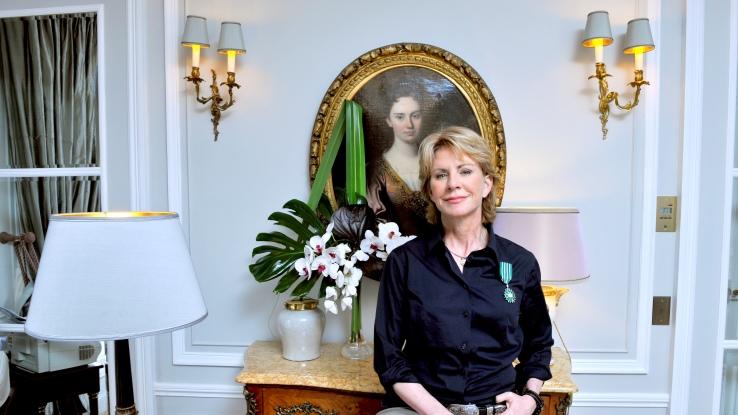
Cornwell contended that Sickert'due south paintings oftentimes portrayed themes of violence confronting women. She believes the motive for the murders was Sickert's alleged disability to have sex due to a bungled surgery on his penis. According to critics, Cornwell provided little evidence that Sickert ever had such a surgery.
Cornwell May Take Cutting Up One of Sickert's Paintings for Proof
Cornwell was so convinced that Walter Sickert was Jack the Ripper that she purchased 31 of his paintings, some of his letters and his writing desk-bound in search of evidence to support her theory. Co-ordinate to Cornwell, her investigation price nearly $seven million.
In 2001, The Guardian newspaper reported that Cornwell had cut upwards one of Sickert'southward paintings to obtain DNA or any other boosted proof that the creative person was truly the killer. The art world was shocked by Cornwell's behavior and chosen it an act of "monstrous stupidity." All the same, Cornwell has denied the allegation that whatsoever of Sickert'due south work was damaged.
Polish Hairdresser Aaron Kosminski
Polish barber Aaron Kosminski has been repeatedly named as a viable Jack the Ripper suspect. After the pogroms forced many Eastern European Jews to flee their homes, Kosminski and his siblings immigrated to United kingdom of great britain and northern ireland from Poland. They ended upwards in the slums of Whitechapel, where Kosminski worked sporadically as a hairdresser.
Assistant Chief Lawman Sir Melville Macnaghten named Kosminski as a prime doubtable. According to Macnaghten, Kosminski "had a great hatred of women…with stiff homicidal tendencies." Kosminski was admitted to the Leavesden Asylum in 1894, merely there were never any reports of him showing violence during his residency at the facility.
Kosminski Was a Paranoid Schizophrenic
Kosminski was thought to have suffered from paranoid schizophrenia. His symptoms included auditory hallucinations and an intense fright of accepting food from other people. Kosminski was so fearful of nutrient that was offered to him that he preferred to eat morsels that had dropped on the ground.

Kosminski spent well-nigh of his adult life in and out of insane asylums and public workhouses. At one point, the mentally unstable man was committed later on threatening to impale his sister with a knife. He died in 1919 at the historic period of 53. At the time of his death, Kosminski weighed simply 93 pounds.
Ripper Victim Catherine Eddowes' Shawl Was Analyzed for DNA Evidence
In 2007, writer Russell Edwards purchased the stained shawl of Ripper victim Catherine Eddowes. It's believed police constable Amos Simpson discovered the shawl when he arrived at the scene of the murder and kept it for unknown reasons. Hoping to solve the Ripper mystery, he gave it to Liverpool John Moores Academy biochemist Dr. Jari Louhelainen for Dna analysis.

In 2019, Louhelainen and reproduction expert David Miller submitted a paper to the Periodical of Forensic Sciences that claimed they were able to extract mitochondrial DNA from the shawl of Ripper victim Catherine Eddowes. Dna samples were also taken from Eddowes' and Kosminski's descendants.
Could Eddowes' Shawl Hold Ripper Clues?
The tests run by the two researchers compared fragments of mitochondrial Deoxyribonucleic acid, that portion of DNA inherited from a person'southward mother. According to the researchers, The Dna was a positive friction match to the sample provided by the living relative of Kosminski, which concluded the study that appeared in the Periodical of Forensic Sciences.

Louhelainen claimed he was able to excerpt mitochondrial Dna from the silk shawl that was allegedly found adjacent to victim Catherine Eddowes. It was a 99.2% match with the female person line of Kosminski's sisters. The Deoxyribonucleic acid as well showed that the sample came from someone with brown pilus and brown optics.
Skeptics Contend Louhelainen and Miller's Findings
Not everyone subscribes to the conclusions made in Louhelainen and Miller'southward study. Some scientists believe key details of the DNA were omitted, making the data difficult to verify. According to Louhelainen and Miller, the information was purposely omitted to protect the privacy of the Eddowes and Kosminski descendants.

Other Ripper researchers are highly doubtful that Aaron Kosminski was responsible for whatsoever of the Whitechapel murders, citing that the immigrant preferred speaking in Yiddish. With such poor English language skills, it was highly unlikely Kosminski would have been able to lure any of the women into dark alleyways.
Was Jack the Ripper an American Ripper?
Could Jack the Ripper accept actually been an American Ripper? H.H. Holmes was a physician who gained fame as America'southward starting time known series killer. Born Herman Webster Mudgett, Holmes was a known con artist and bigamist. Like Jack the Ripper, he was cold and calculating and hands evaded detection.
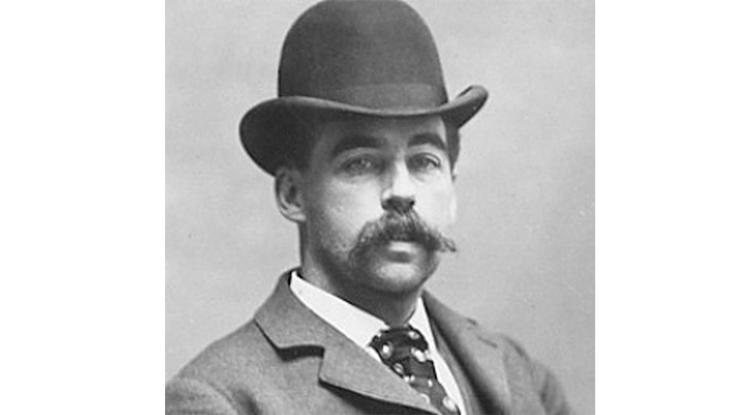
Attorney Jeff Mudgett believes that his slap-up-smashing-grandfather H.H. Holmes and Jack the Ripper are the same. Mudgett says that information contained in two diaries he inherited from Holmes reveals how his reprehensible relative murdered London prostitutes. Send rider logs show that an H. Holmes traveled from London to the United States soon after the murders stopped.
Holmes Said He'd Always Been Fascinated With Decease
Holmes was built-in in 1861 to an affluent New Hampshire family. He claimed that he was bullied every bit a kid and that schoolmates locked him into a closet with a skeleton. Rather than feeling horror, Holmes said he developed a fascination with death.
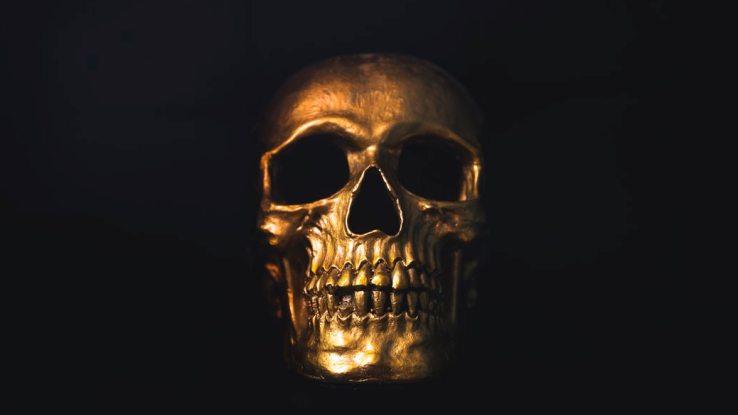
Mudgett married in 1878, and he and wife Clara had a son in 1880. In 1884 he graduated from the University of Michigan's School of Medicine, where he'd worked with cadavers equally an assistant in the anatomy lab as a medical educatee. Acquaintances remember Mudgett was abusive to Clara, who left him in 1884.
Holmes Built a "Murder Castle"
Following his graduation, Mudgett changed his name and moved to Chicago after he was involved in several scams and his name was linked to the disappearance of a little male child. In 1886, Holmes gear up shop in Chicago as a pharmacist and began murdering people in order to steal their property.
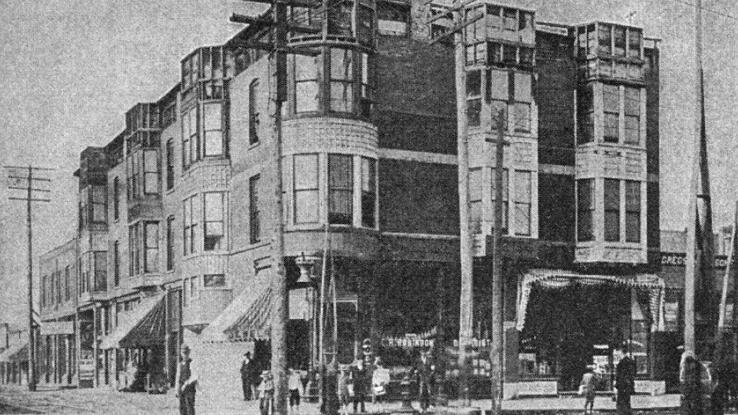
Holmes carried out the murders in a building he claimed would serve every bit a hotel for visitors attending the World's Columbian Exposition. Only the building was actually designed for torture, executions and body disposals. After his arrest, investigators discovered hidden passageways and rooms constructed with trap doors. The grisly revelation resulted in the building existence nicknamed the "Murder Castle."
"I Was Built-in With the Devil in Me"
Holmes was eventually arrested, tried and convicted for the murder of his friend, Benjamin Pitezel. Pitezel had helped Holmes scam insurance companies, but he and his children were murdered when Holmes thought their deaths might bring in some money.
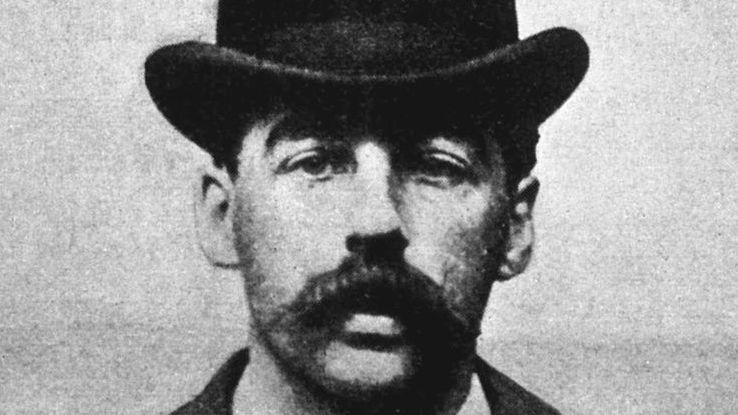
Holmes initially confessed to 27 murders, but the number somewhen rose to 130 and could be as high as 200. Holmes began making numerous confessions, but it was difficult for investigators to determine truth and fiction. In prison house, Holmes wrote, "I was born with the devil in me." He also claimed that his appearance while in prison was beginning to await like that of Satan.
Mudgett Insists Holmes Is Linked to the Ripper Murders
Holmes was hanged on May vii, 1896. Jeff Mudgett believes a lookalike was tricked into taking Holmes' identify in prison. Although Holmes' trunk was discovered in a Pennsylvania grave, and DNA has conclusively proven his identity, Mudgett insists Holmes is linked to the Jack the Ripper murders.
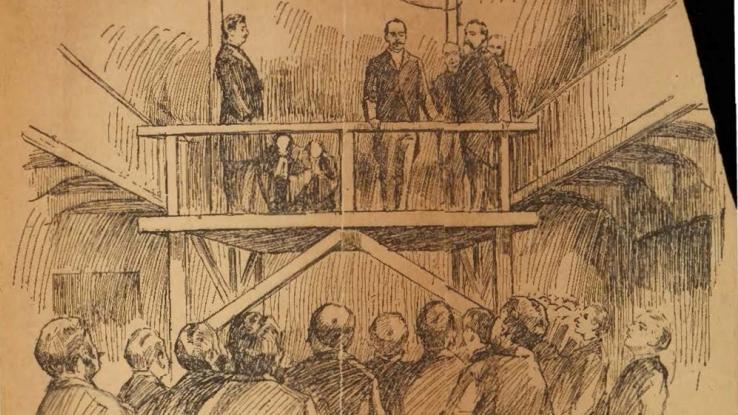
In an NBC 5 Chicago interview, Mudgett maintained that his relative is however a viable suspect, stating, "There are too many coincidences for this to be some other bogus theory. I know that the evidence is out there to show my theory and I'g not going to give upwards until I find it."
Was the Lambeth Poisoner the True Ripper?
Thomas Neill Foam was a Scottish-Canadian physician-turned-serial killer who was known in the printing as the "Lambeth Poisoner." Born in Scotland and raised near Quebec City, Cream received his medical degree from McGill Academy and did post-graduate training at St. Thomas' Hospital Medical School in London. His analogousness for killing prostitutes fabricated him a probable suspect.
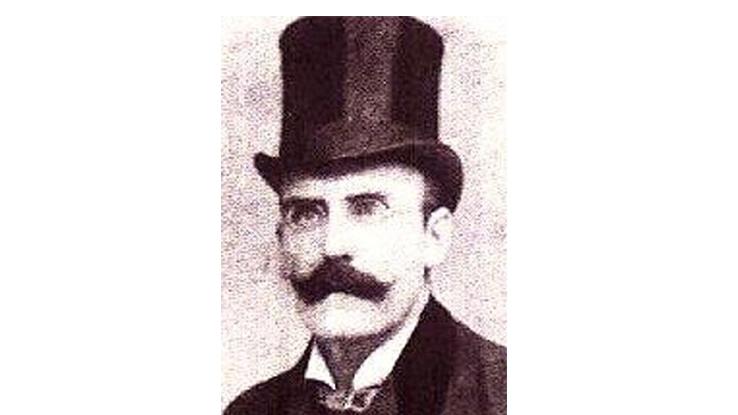
Cream had a shady past. In 1876, Cream had a relationship with a young lady named Flora Brooks that resulted in an unexpected pregnancy. Cream nearly killed Brooks when he attempted to abort the baby. At the insistence of her father, Foam married Brooks, then he gear up off to England.
Cream Escaped Two Murder Convictions
Due to multiple run-ins with the law, Cream moved between Canada, the Us and England, typically setting up shop every bit an abortionist in seedy areas. After his return to Canada, the body of chambermaid Kate Gardener was constitute in Cream's role. Lying next to the body was a bottle of chloroform. Despite the unusual circumstances and Cream'southward nefarious background, Foam was non charged with murder.
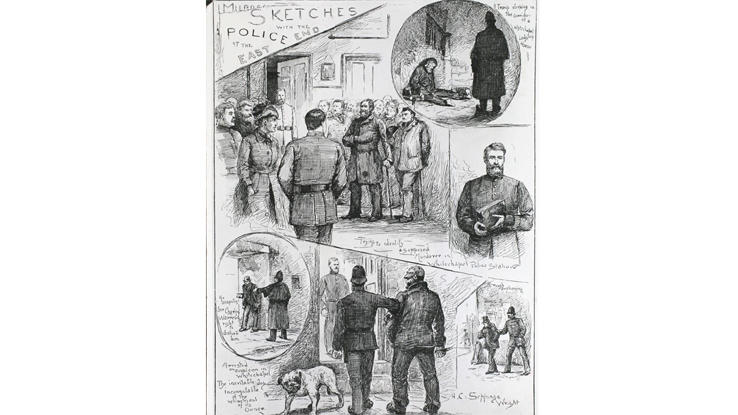
After Gardener's expiry, Cream headed off to Chicago. In August of 1880, a woman by the proper noun of Julia Faulkner, who'd been associated with Cream, also died under unexplained circumstances. Cream was arrested merely escaped formal charges.
Cream Begins Selling Poisonous Potions
In 1891, Foam began selling strychnine "medicines" to prostitutes, claiming they prevented venereal diseases and cured epilepsy. Foam too added strychnine to a potion that killed Daniel Stott, a patient who learned Cream was having an affair with his wife. Investigators discovered Stott had been poisoned and sent Cream off to the Illinois Country Penitentiary.
Cream was sentenced to life in prison but was released for expert behavior in 1891. He traveled to Canada, then ready off for England. Inside days, prostitutes Ellen "Nellie" Donworth, 18, and Matilda Clover, 27, died after consuming Cream's concoctions. Cream also killed prostitutes Alice Marsh, 21, and Emma Shrivell, xviii, afterwards lacing their drinks with strychnine.
Cream Attempted to Extort Coin After the Murders
In addition to working as an abortionist and poisoner, Cream also became an accomplished extortionist. When a prostitute died, Cream would then accuse a prominent man of the murders and try blackmail. Cream tried to bribery his neighbor, Joseph Harper, claiming he had testify that the human had killed Marsh and Shrivell. He told Harper that a sum of £1,500 could make the unfortunate accusation go away.
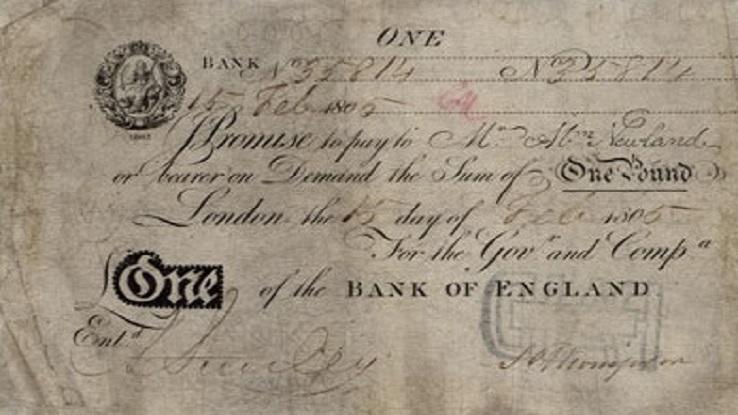
Harper refused to cavern to Cream'due south demands. The police were eventually able to necktie the doctor to the murders when Scotland Yard surveilled Cream and learned that he often met with prostitutes.
Foam'southward Penalisation
Cream was convicted of murdering Matilda Clover and hanged in 1892 at the age of 42. Co-ordinate to executioner James Billington, Foam'due south last words on the scaffold before his death were "I am Jack the…." Billington reported that this was Foam's confession, revealing his identity equally Jack the Ripper.
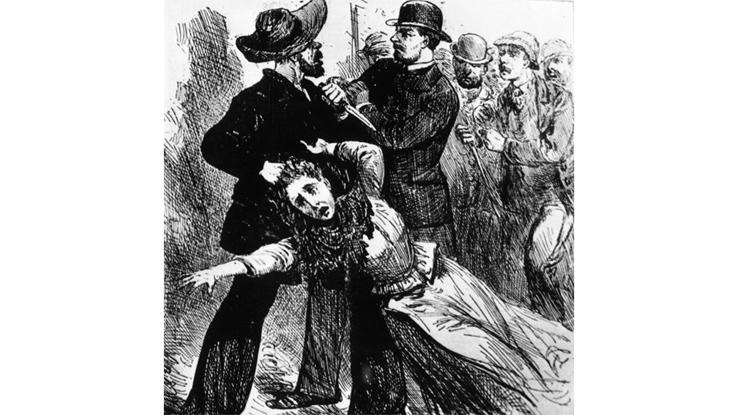
While records evidence Cream had been in prison during the Ripper murders, some researchers speculate that the prison where he was held was so corrupt that he may take bribed prison house officials in order to gain an early release and that the remainder of his term was served by a lookalike.
Was the Ripper a Royal?
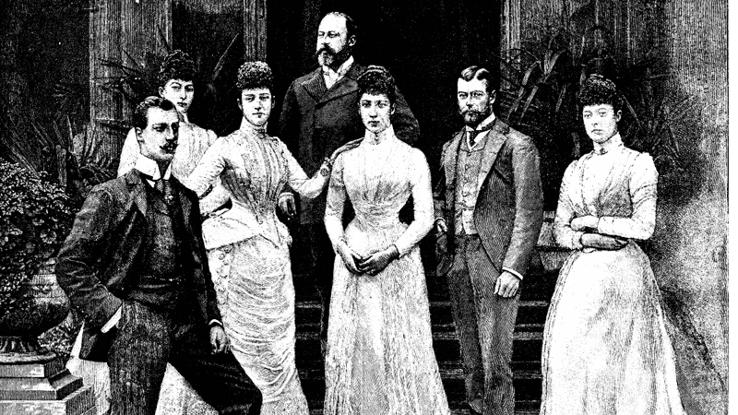
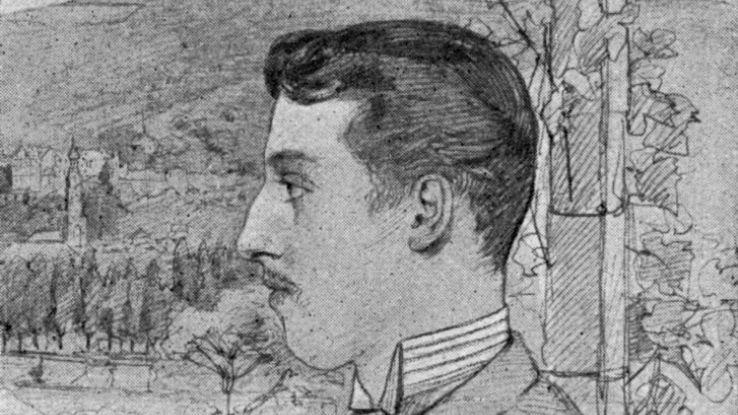
One of the most sensational suspects is Queen Victoria's grandson, Prince Albert Victor. Known fondly as "Eddy," the prince was the son of Prince Edward and Princess Alexandra. When his male parent became king, Albert Victor became second in line to the British throne. But the prince never had the chance to become king, dying at the age of 28 from flu during the 1891 pandemic.
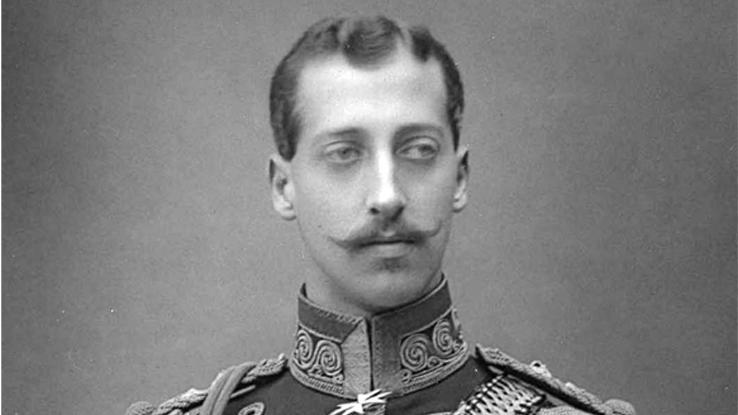
During his cursory life, Albert Victor's sexuality and mental health were subjects of great speculation. He was rumored to accept been associated with a homosexual brothel. The rumors and scandal were a abiding source of embarrassment to the prince and royal family.
Prince Albert Victor
In 1970, British physician Thomas Stowell wrote an article that accused the prince of being the infamous murderer. According to Stowell, the prince's Jack the Ripper alter ego committed the murders during bouts of temporary insanity caused by an avant-garde example of syphilis.
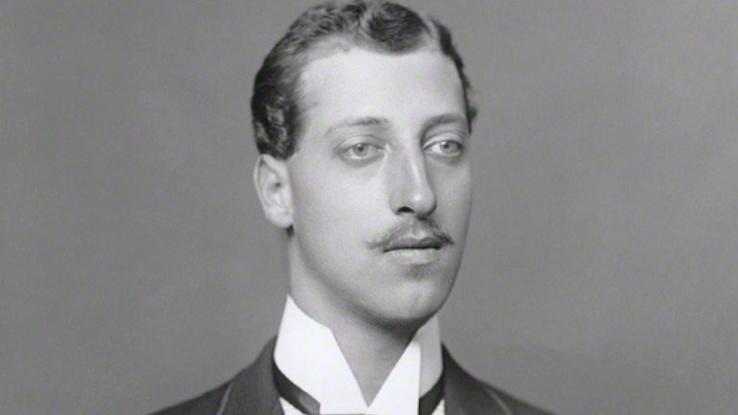
Stowell claims he developed his theory later on seeing the individual papers of imperial physician Sir William Gull. In his writings, Gull referred to the Ripper only as "South" merely besides described him as being a admirer of "collars and cuffs," a nickname for the well-dressed prince, who often wore starched collars to hibernate his unusually long neck.
Were the Murders an Act of Revenge?
Ripperologists who agree with Stowell believe the prince may have been exacting revenge on prostitutes. Rumors swirled that he'd contracted syphilis from an illicit encounter while at sea with the Royal Navy in the Caribbean. However, the stories of his illness take never been verified.
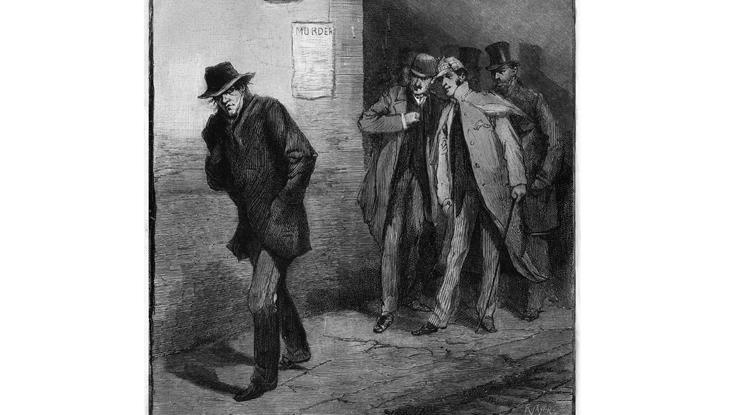
"The killer was a gentleman who had contracted syphilis in his youth, and now in the final stages of the disease suffered delusions," writes writer Christopher J. Morley. "He became sadistically aroused when watching deer being dressed, and when his warped sexual passion exploded committed the murders. He was assisted by the government who helped to conceal it from the public."
Did the Majestic Family Hide Albert Victor's Violence?
Stowell alleged that after the second Whitechapel murder, the purple family was sure that Eddy was actually Jack the Ripper, but they needed to proceed his violence and disease a secret. Stowell claims that his fierce beliefs was curtained from the public when the majestic family had him committed to a private mental hospital in Sandringham.
Stowell asserts that Eddy's true crusade of death was from syphilis and not a flu as the family had claimed. Stowell as well states that when the family realized Albert Victor was not a suitable candidate for king, the prince was poisoned after being given a fatal dose of morphine.
Did the Murders Encompass Upward a Purple Secret?
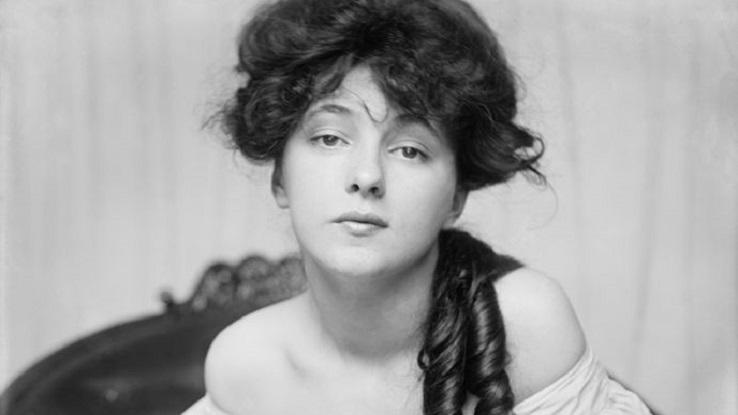
A second theory hypothesized that the murders covered upward a clandestine union between the prince and a local woman. In the book "Prince Jack" past Frederick Spiering, the prince had fallen in love with a commoner by the name of Elizabeth Crook, and the two married and had a child. In addition to her lowly station in life, Crook was likewise a Catholic.
Their union would accept been considered a family disgrace. According to Spiering, the royal family unit plotted to murder anyone with knowledge of the relationship. While the theory of the Prince every bit Ripper is intriguing, at that place'south nothing more than circumstantial evidence linking the prince to the murders.
Was Jack the Ripper a Woman?
Could Jack the Ripper accept been Jill the Ripper? Some Ripperologists developed the theory after a murder in 1890 was committed past a woman named Mary Pearcey. Pearcey invited friend Phoebe Hogg to visit her home and brutally murdered Hogg and her infant. It's believed Pearcey was having an affair with Hogg's husband when she decided to murder the woman and child.
On October 24, 1890, Pearcey's neighbors heard screams coming from her home. That evening, Hogg'due south horribly mutilated trunk was discovered. A bloodsoaked baby carriage was institute about a mile abroad, with Hogg's infant Tiggy nearby. Witnesses said they had seen Pearcey pushing the buggy.
Pearcey Seemed Unconcerned When Law Searched Her Claret-spattered Home
Similar Jack the Ripper'due south victims, police discovered the bodies of Hogg and her infant had been savagely attacked and dumped. When investigators went to question Pearcey, they found her home was spattered with blood. Upon asking for an explanation, Pearcey replied, "Killing mice, killing mice, killing mice."
When authorities searched her home they found bloodstains in the kitchen, forth with a bloodstained poker and a carving knife. There were also ii broken windows in the kitchen, indicating signs of a struggle. When Pearcey was arrested, police force found claret on her clothing, and she was wearing Hogg's wedding ring.
The Pearcey Murders Had Similarities to the Ripper Killings
Co-ordinate to some Ripperologists, Hogg'due south vicious murder shared similarities with the horrific Whitechapel killings. Phoebe Hogg and the Whitechapel prostitutes died from slashes to the throat, and all had their bodies dumped in public places.
Pearcey was hanged in 1890. Ripper investigator Sir Melville Macnaghten witnessed Pearcey'south execution and wrote, "I have never seen a woman of stronger physique… Her nerves were as iron bandage as her body." Executioner James Berry gave a like account of Pearcey's demeanor. Prior to her death, Pearcey placed a cryptic advertisement that read, "mecp final wish of mew, accept non betrayed mew," merely refused to reveal its pregnant.
Pearcey Never Confessed to Whatever Crimes
Co-ordinate to those present at her execution, Pearcey's final words were, "My sentence is a only one, but a adept deal of the show confronting me was fake." Pearcey was so infamous that Madame Tussaud's Wax Museum created a likeness of her that attracted 30,000 curious visitors. The noose used to hang Pearcey can be found at the Blackness Museum of Scotland Yard.
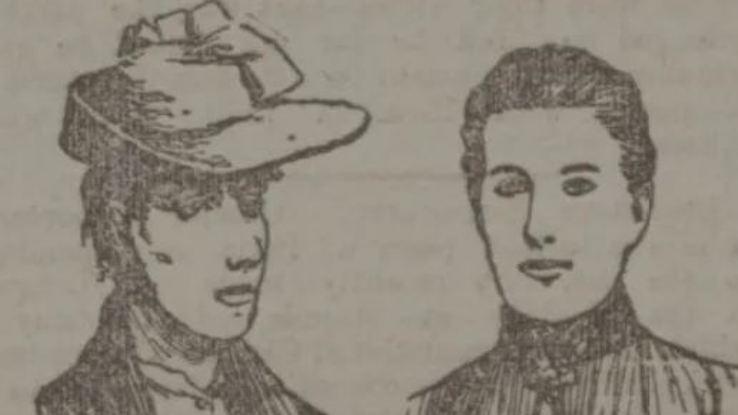
Nowadays-mean solar day Jack the Ripper scholars believe Pearcey may take suffered from a personality disorder exacerbated by alcoholism and depression. Pearcey's attorney attempted to bear witness that she was mentally ill. However, an examination by three doctors failed to discover any medical bug.
"Jill the Ripper" Could Have Been a Midwife…or a Man
After Pearcey'south trial, some investigators theorized that Jack the Ripper may accept been a man dressed as a woman. At the time of the murders, it was common for midwives to evangelize babies and sometimes perform abortions. Their blood-stained clothing typically went unnoticed by area residents.
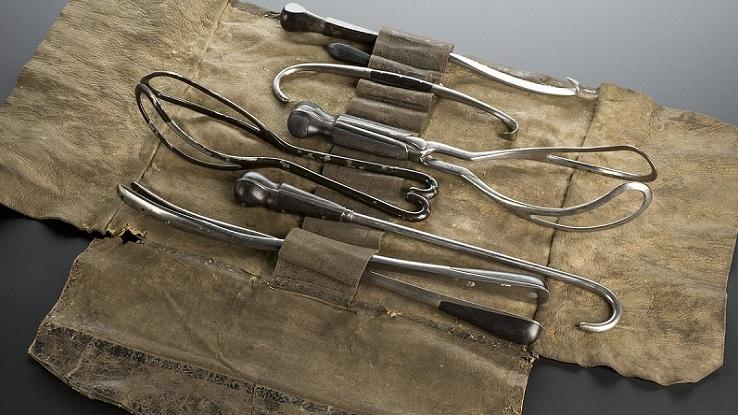
An impostor dressed as a adult female walking tardily at night would likely be ignored. Writer Sir Arthur Conan Doyle subscribed to this theory. Another theory involved a "mad midwife" who was either disgruntled or deranged. Like doctors, midwives were also familiar with the female anatomy and even knew nigh certain force per unit area points that could render a woman unconscious.
Source: https://www.faqtoids.com/knowledge/jack-the-ripper-suspects?utm_content=params%3Ao%3D740006%26ad%3DdirN%26qo%3DserpIndex
0 Response to "Jack White You Know That I Know"
Post a Comment